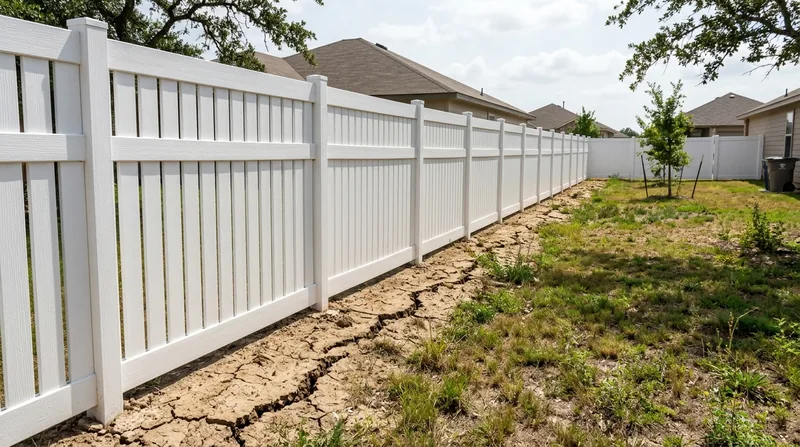




Vinyl & PVC fence installation in Austin demands more than standard post-and-panel work. The Blackland clay that dominates Greater Austin swells and shrinks through every wet-dry cycle, heaving fence posts and racking panels that would stand straight on stable ground. Vinyl won't rot like wood, but posts still need proper depth and concrete footing to hold against clay movement. Since 2015, we have installed vinyl and PVC fencing across Austin, Round Rock, Cedar Park, and surrounding areas, learning what works on expansive soil and what fails within a season. A vinyl fence can last 20 to 30 years here, but only if the foundation is set right from the start.
Why Vinyl Fence Installation Matters in Austin's Clay Soil
Austin's soil is the defining constraint for any fence. The clay beneath the surface swells in wet months and shrinks in drought, creating a pumping action that lifts and settles posts year after year. Wood fences succumb to rot at the ground line in 8 to 12 years. Vinyl panels themselves resist moisture, but the post structure must anchor deeper and more securely than textbook specifications call for in stable ground. Getting the post depth, concrete volume, and spacing right on the first install saves thousands in repairs later.
- Posts set in concrete 36 to 42 inches deep resist clay heave better than tamped soil alone, especially on Blackland clay east of the escarpment.
- Vinyl panels stay straight longer when posts are spaced at 6-foot intervals instead of 8 feet, reducing racking under clay movement.
- PVC rail and post sleeves protect wood structural members from moisture, extending the life of the frame underneath the vinyl covering.
- Post spacing and footing depth are set by the local building department, and we verify requirements before digging.
Proper installation on clay soil is the difference between a 20-year fence and a leaning one that needs repair in five.
Key info: Austin's clay soil heaves fence posts up to 2 inches in a single wet season. Posts set shallow or in tamped soil alone will lean within three years. Concrete footings 36 to 42 inches deep, sized to the post diameter, are the only reliable anchor in Greater Austin's Blackland clay. Check the City of Austin development services permit requirements at austin.gov/development-services before digging.
How We Install Vinyl and PVC Fencing in Austin: Step by Step
Vinyl fence installation on clay soil follows a sequence that respects both the material and the ground beneath it. We start with a utility locate (Texas 811 is required by law), then mark the fence line, set posts at the depth and spacing the local code requires, and install panels level and plumb even as the ground shifts. The process takes longer than installation on stable ground, but it holds.
- Call Texas 811 to locate buried utilities before any post hole is dug, as required by state law.
- Mark the fence line and verify setback distances from property lines according to the local building code and any HOA deed restrictions.
- Dig post holes 36 to 42 inches deep, sized to the post diameter, and backfill with concrete mixed to proper strength for clay soil.
- Allow concrete to cure fully (48 hours minimum) before installing rails and vinyl panels.
- Install panels level and plumb, checking frequently with a transit or laser level, because clay movement will show every installation error.
- Trim and cap posts, install any gates, and verify the entire fence is square and straight before final walkthrough.
A vinyl fence installed this way will stay straight through the wet-dry cycles that rack poorly installed fences every year.
Example: A 150-linear-foot vinyl privacy fence in South Austin, on Blackland clay with 6-foot post spacing and concrete footings, takes 3 to 4 days from utility locate to final inspection. A similar job in Pflugerville with rocky ground to the west may be faster because digging is easier, but footing depth remains the same. Check with the local building department in your city before we start, because setback and height rules vary across Greater Austin.
For detailed guidance on vinyl fence options and when repair makes more sense than replacement, see our fence repair service page.
Vinyl and PVC Installation Methods: Comparing Your Options
| Method | Description | Best For |
|---|---|---|
| Vinyl privacy fence with concrete footings | 6-inch or 8-inch vinyl posts set 36-42 inches deep in concrete, with vinyl panels and rails installed plumb and level. | Blackland clay soil in Austin, Round Rock, and Cedar Park. Maximum durability on expansive soil. |
| PVC-wrapped wood post and rail | Pressure-treated wood frame with PVC sleeves over posts and stringers, vinyl panels installed between rails. Reduces cost while protecting the wood structure. | Budget-conscious installations where vinyl appearance is the priority and wood rot protection is essential in humid Austin climate. |
| Vinyl semi-privacy fence | Vinyl panels with spacing or lattice sections, allowing some sight lines while blocking direct view. Lighter wind load than solid privacy panels. | HOA-approved designs in master-planned communities like Lakeway or West Lake Hills where solid privacy is restricted by deed. |
| Vinyl picket fence | Vinyl pickets installed on pressure-treated or PVC-wrapped rails, open design for decorative or pet containment use. | Front yards, pool surrounds (when code-compliant), and properties where visibility and aesthetics matter more than privacy. |
| Vinyl board-on-board | Vinyl boards overlapped on both sides of the rail, creating a solid appearance with no gaps as panels shift with temperature and ground movement. | Properties where complete privacy is required and where clay heave could open gaps in side-by-side installation. |
Each method trades off cost, durability, maintenance, and appearance. We recommend the method that best fits your soil conditions, HOA rules, and long-term goals.
Vinyl & PVC Fence Installation Cost in Austin: What to Expect
Vinyl fence pricing in Austin starts at $42 per linear foot for a basic privacy fence with concrete footings on clay soil. That baseline covers posts set 36 to 42 inches deep, vinyl panels, rails, and labor. Several factors move the price up or down: post spacing, panel height, soil conditions, terrain access, and whether existing fence removal is needed. A 150-foot privacy fence on a typical Austin lot runs $6,300 to $8,500 before any add-ons like gates or post caps.
Vinyl semi-privacy or picket fences cost less per foot because panels are lighter and require less structural support. Board-on-board vinyl, which overlaps panels to prevent gaps as clay heaves, costs more because of the extra material and labor. PVC-wrapped wood frames offer savings over solid vinyl posts but still protect the structure from Austin's humidity and clay-line moisture.
Getting two or three estimates from local contractors is wise, because soil conditions and local code requirements vary across Greater Austin. An estimate should include post spacing, footing depth, concrete volume, and any site-specific challenges like tree roots, utility lines, or steep grade. We provide free estimates within 24 hours at (737) 237-0592, and we walk the property to account for soil and terrain.
For a complete pricing overview and examples of finished jobs, see our pricing page.
Vinyl & PVC Fence Installation Near Me: What Austin Homeowners Should Know Before Hiring
Hiring a fence contractor is a long-term decision, because the fence will stand on your property for 15 to 25 years. Look beyond the lowest estimate and verify that the contractor understands local soil, code requirements, and the specific challenges of installing on Blackland clay. Ask about insurance, references from similar jobs in your area, and how they handle permits and utility locates.
- Confirm the contractor carries general liability and workers' compensation insurance, and ask for a certificate of insurance naming your property.
- Texas issues no state license for fence installation, so licensing is set by county and city. Verify local permit requirements with your city or county building department before digging.
- Ask for at least two references from vinyl fence jobs completed in your zip code or neighborhood within the last two years.
- Understand whether the contractor handles the permit application and utility locate, or whether you are responsible for calling Texas 811 and obtaining the permit.
- Check HOA deed restrictions and architectural guidelines if you live in a master-planned community, because height, material, and color rules vary widely across Greater Austin.
- Get the estimate in writing with post spacing, footing depth, panel height, and material specifications clearly stated.
A contractor who takes time to walk your property, explain local soil challenges, and answer permit questions is more likely to deliver a fence that holds straight through Austin's wet-dry cycles.
For questions about your specific project or to request a free estimate, contact us here or call (737) 237-0592.
Vinyl & PVC Fence Installation in Austin: Pricing Guide
| Service | Price | Details |
|---|---|---|
| Vinyl privacy fence with concrete footings | Starting at $42/ft | Posts set 36-42 inches deep on clay soil, vinyl panels, rails, concrete. Price rises with post spacing, panel height, and terrain difficulty. |
| PVC-wrapped wood frame with vinyl panels | Starting at $35/ft | Pressure-treated posts and rails with PVC sleeves, vinyl covering. Lower cost than solid vinyl posts, same moisture protection in humid Austin climate. |
| Vinyl semi-privacy or picket fence | Starting at $28/ft | Lighter panels, reduced structural support needed. HOA-approved designs in master-planned communities. Cost varies by panel style and spacing. |
| Gate installation with vinyl fence | Starting at $800 | Single vinyl gate with hardware, posts, and hinges. Automatic or driveway gates cost more and require electrical work and operator installation. |
| Site-specific or complex installations | On estimate | Steep grades, tree root interference, soil stabilization, or multiple gates require on-site inspection before pricing is final and accurate. |
| Estimate and consultation | Free | Property walkthrough, soil assessment, code verification, and written estimate within 24 hours. No obligation to book. Call (737) 237-0592. |
Indicative pricing, the exact cost depends on square footage, finish, and site access. Free personalized estimate within 24h at (737) 237-0592.


