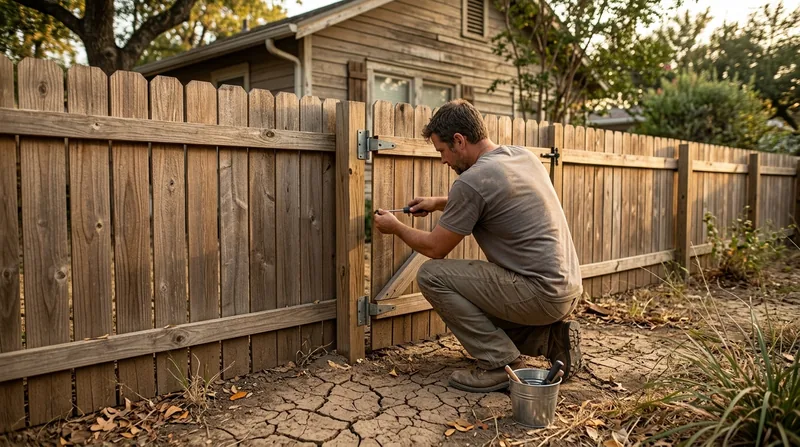




A sagging gate on an Austin fence line usually fails first where the ground moves most, and that's almost always a post problem, not the gate frame itself. Our expansive clay soil swells and shrinks with wet and dry cycles, heaving fence posts and racking gate frames out of square. When you need fence gate installation in Austin, or your existing gate won't latch or swings on its own, the fix usually starts with resetting the hinge post below the soil movement and squaring the frame. We work on wood gates, vinyl gates, chain link gates, ornamental metal gates, and automatic driveway gates across Austin, Round Rock, Cedar Park, and the surrounding communities. A gate that swings right again and latches tight is worth the call, and a reset post often costs far less than a full gate replacement.
Why Gate Installation and Repair Matters in Austin's Clay Soil
The Gulf Coast clay that defines Austin's soil is the reason most gates sag. Dry clay shrinks and cracks, wet clay swells, and that seasonal heave pushes fence posts out of plumb year after year. A gate hinge post that settles unevenly will bind, sag, or swing open on its own. The latch won't catch, or it catches only when you muscle the gate closed. Over time, a twisted gate frame cracks boards, strips hinges, and makes the whole fence line look neglected.
- We reset hinge posts below the active heave zone to hold the gate plumb and square.
- We square gate frames and re-hang hinges so the gate swings freely and latches tight every time.
- We reinforce sagging gates with anti-sag bracing to prevent twist and future movement.
- We replace rotted posts at the ground line where moisture rots untreated wood fastest.
- We install new gates on solid, concrete-set posts that hold through the wet-then-dry clay cycle.
A gate that hangs right makes the whole fence line look solid and keeps your property secure.
Key info: Austin's clay soil heaves fence posts an average of 0.5 to 1.5 inches per year in the late-summer dry cycle. A gate that sags in August will often tighten again in October, but the cycle weakens hinges and hardware over time. Reset the post below the active zone, and the gate stays plumb year-round.
How We Install and Repair Gates in Austin: Step by Step
Gate installation and repair in Austin starts with understanding the soil and the load. A driveway gate that swings hundreds of times a year takes more post depth and concrete than a yard gate that opens twice a week. We measure the gate opening, check post spacing and hinge hardware, and dig post holes below the active heave zone. For new installations, we set posts in concrete at least 36 inches deep on standard residential gates, deeper for heavier or automatic driveway gates. For repairs, we assess whether the post can be reset or needs replacement, and whether the frame can be squared or the whole gate needs to come down.
- We locate utilities with a Texas 811 call before we dig any post holes.
- We excavate post holes below the active clay movement, typically 36 to 48 inches for residential driveway gates.
- We set posts in concrete, not just tamped soil, to anchor against seasonal heave.
- We square the gate frame using a level and a tape measure, checking diagonal measurements for true square.
- We hang hinges and test the gate swing, latch, and self-closing hardware before we leave the job.
- We add anti-sag bracing to the gate frame if the span is long or the gate is heavy.
The whole process takes one to two days for a standard gate repair or new installation, depending on soil conditions and whether we're replacing a post.
Local example: A homeowner in Cedar Park called us about a wood privacy gate that sagged at the hinge post every summer. We dug the hinge post 48 inches deep, set it in concrete, and reset the gate frame plumb. Three years later, the gate still swings and latches tight. The post settled below the active heave zone, and the concrete anchor held through every wet-dry cycle.
For more information on how we handle fence repair across all materials, visit our fence repair page.Gate Installation and Repair Methods
| Approach | Description | Best for |
|---|---|---|
| Post reset in concrete | We excavate the existing hinge post, reset it below the heave zone, and anchor it in concrete to resist seasonal soil movement. | Sagging gates where the post is sound but has settled unevenly. |
| Post replacement | We remove a rotted or severely damaged hinge post and install a new pressure-treated post set in concrete at proper depth. | Posts rotted at the ground line or damaged beyond repair. |
| Frame squaring and re-hang | We square a twisted gate frame using diagonal measurements, re-hang hinges, and test swing and latch before finishing. | Gates that bind or won't latch cleanly but the frame is not cracked. |
| Anti-sag bracing installation | We add diagonal or horizontal bracing to a gate frame to prevent twist and sag, especially on long spans or heavy gates. | Large or heavy gates, or gates that show early signs of racking or sag. |
| New gate installation | We build or install a new gate on concrete-set posts, hung with heavy-duty hinges and self-closing or self-latching hardware. | New openings in existing fences, or when repair cost exceeds the value of a new gate. |
| Automatic driveway gate installation | We install linear or cantilever gate operators, set posts for the load, and test remote access and safety features. | Driveway gates that require remote opening or heavy-duty operation. |
Gate Installation and Repair Cost in Austin: What to Expect
Gate repair in Austin starts at around $525 for a simple hinge reset or latch repair on an existing gate. A full post reset with concrete anchoring typically runs $800 to $1,200, depending on post depth and soil conditions. A new gate installation on concrete-set posts runs $1,500 to $3,500 for a standard wood or vinyl residential gate, and automatic driveway gates with operators run $3,500 to $6,000 or more. The main factors that move the price are post depth (Austin clay often requires 48 inches or deeper), whether you're replacing a post or just resetting it, the gate material and size, and whether the gate needs an automatic operator.
We recommend getting two or three estimates before you book, because soil conditions and existing post damage can vary widely even within the same neighborhood. A free estimate takes 15 to 20 minutes and includes a soil assessment, post depth recommendation, and a clear scope of work. Call us at (737) 237-0592 for a no-obligation walkthrough, or visit our pricing page for a detailed breakdown of gate services and typical costs.
What to Look for When Hiring a Gate Installation and Repair Contractor Near Me in Austin
Finding the right contractor for gate work in Austin means checking three things: insurance, experience with local soil, and a clear understanding of permits. Texas issues no state license for fence installation, so licensing is not a credential to verify. What matters is that the contractor carries full general liability and workers' compensation insurance, can provide a certificate of insurance on request, and understands how Austin's clay soil affects post depth and concrete anchoring. Ask for references from recent gate repairs in your neighborhood, and call two or three to ask how the gate is holding up and whether the contractor showed up on time and cleaned up after the job.
Permit requirements for gates vary by city and county across Greater Austin. The City of Austin may require a permit for a new gate opening in an existing fence line, while some of the surrounding communities do not. Your HOA, if you have one, may also have restrictions on gate material, color, or height. Before you sign a contract, ask the contractor to verify permit requirements with your local building department and check your deed for any restrictions. We can help you navigate these rules and get the job done right the first time.
- Check that the contractor carries full general liability and workers' compensation insurance, and request a certificate of insurance.
- Ask for references from gate repairs or installations in Austin, Round Rock, Cedar Park, or your specific neighborhood.
- Verify permit requirements with your local building department or HOA before the contractor breaks ground.
- Get a written estimate that includes post depth, concrete volume, hinge hardware, and labor, so you know exactly what you're paying for.
- Confirm that the contractor will call Texas 811 to locate utilities before digging any post holes.
The right contractor will answer your questions honestly and explain why post depth, concrete anchoring, and soil conditions matter in Austin. Ready to get started? Contact us for a free estimate and a clear, no-pressure walkthrough of your gate repair or installation.
Gate Installation & Repair in Austin: Pricing Guide
| Service | Price | Details |
|---|---|---|
| Gate hinge or latch repair | Starting at $525 | Tighten or replace hinges, latches, and hardware on existing gates without post work. |
| Post reset with concrete anchoring | Starting at $800 | Excavate, reset, and concrete-set a sagging hinge post below the active clay heave zone. |
| New residential gate installation | Starting at $1,500 | Wood or vinyl gate on concrete-set posts with hinges, latch, and anti-sag bracing included. |
| Automatic driveway gate installation | Starting at $3,500 | Linear or cantilever gate operator with posts, concrete, remote access, and safety testing. |
| Post replacement with new gate | On estimate | Full post removal, replacement, and new gate installation require site assessment for soil and access. |
| Estimate and consultation | Free | No-obligation walkthrough with post depth assessment and written scope of work within 24 hours. |
Indicative pricing, the exact cost depends on square footage, finish, and site access. Free personalized estimate within 24h at (737) 237-0592.


