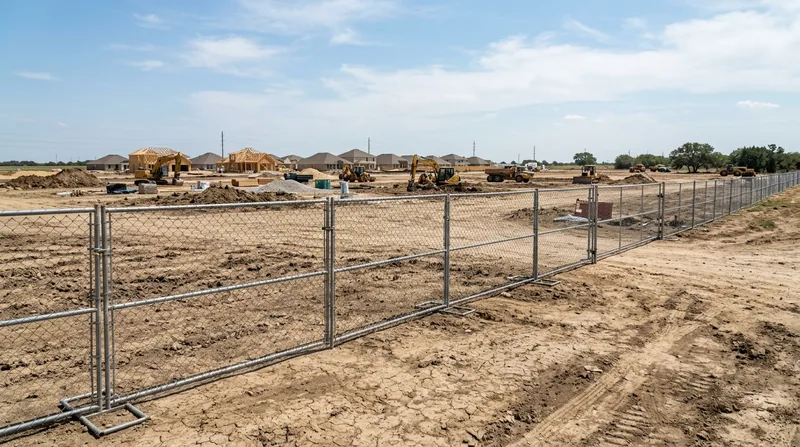




Commercial fence installation in Austin requires a different approach than residential work. Construction sites, event venues, and temporary perimeters face pressure from Austin's expansive clay soil, seasonal flooding, and the intense sun-and-humidity cycle that stresses panel connections. We supply and install commercial chain link fence, panel fencing for subdivision construction sites, and erosion control barriers that hold through drought-cracked ground or sudden flash flooding. Since 2015, we have set temporary and permanent commercial barriers across Austin and the surrounding region, working with general contractors, property managers, and event organizers who need fencing that stays upright and on schedule.
Why Commercial and Temporary Fencing Matters on Austin Job Sites
A construction site without proper perimeter fencing creates liability, theft, and regulatory exposure. Austin's building departments require construction site fencing to meet height, visibility, and material standards that vary by jurisdiction and project scope. The expansive clay beneath most Austin lots means posts heave and shift, which can rack panels or compromise gate operation within weeks if they are not set correctly. Temporary fencing must hold through dust storms, wind events, and the wet-dry cycles that characterize late summer and fall.
- We set posts in concrete at proper depth and spacing to resist heave and racking throughout the project timeline.
- We supply chain link, welded panel, and solid-board options rated for high-traffic perimeters and equipment staging areas.
- We install access gates with self-closing and self-latching hardware to meet OSHA and general contractor safety standards.
- We handle silt fence installation and erosion control barriers that comply with stormwater management rules for disturbed soil.
- We remove and salvage panels at project end, recovering materials and reducing your disposal cost.
Proper site fencing protects your project, reduces liability claims, and keeps your schedule on track.
Austin example: A 15-acre residential subdivision in Round Rock requires 2,400 linear feet of temporary 6-foot chain link fencing around the active grading zone. We set posts on 6-foot centers in concrete, install privacy slats if dust control is the priority, and schedule removal once the builder transitions to permanent perimeter fencing. Check your local building department for site-specific height and material rules, as they vary across Greater Austin jurisdictions.
For more on how we approach fencing work across Austin, see our fence repair services.
External reference: Austin Development Services publishes site fencing and erosion control requirements for projects within city limits.
How We Install Commercial and Temporary Fencing in Austin
Commercial fencing installation follows a systematic process designed to meet code, resist the local soil and climate, and deliver a timeline that aligns with your project schedule. We begin with a site walkthrough to assess ground conditions, utility locations, and gate placement. Texas law requires a utility locate (811 call) before any post hole is dug, and we coordinate that step as part of our scope. Once the line is marked and utilities are flagged, we set posts at proper depth and spacing, backfill with concrete, and install panels or chain link with appropriate hardware and bracing.
- We call 811 for a free utility locate and mark all underground lines before breaking ground on post holes.
- We set posts 48 to 72 inches deep depending on soil type and frost line, with concrete backfill to resist heave.
- We install panels level and plumb, using anti-sag bracing on gates and long runs to prevent racking under wind or load.
- We hang access gates with hinges, latches, and operators rated for the frequency and duty cycle of your site.
- We document the completed installation and provide as-built photos for your project file and insurance record.
This method ensures your temporary fencing meets code, stays upright through seasonal weather, and comes down cleanly when the project ends.
Local example: A commercial development in Cedar Park required 1,800 linear feet of temporary 6-foot welded-panel fencing around a 12-month construction zone. We set posts on 8-foot centers in concrete, installed three hinged access gates with self-closing hardware, and added anti-sag bracing on the perimeter facing prevailing wind. The fencing remained plumb and secure through two significant spring storms and a dry spell that cracked the surrounding clay. Removal took one day, and all materials were salvaged and reused.
Learn more about our chain link fence installation for residential and commercial applications.
Commercial and Temporary Fencing Methods in Austin
| Approach | Description | Best for |
|---|---|---|
| Chain Link Panels | Galvanized or vinyl-coated steel mesh in 4-foot to 6-foot heights, set in steel posts with tension bands and stretcher bars for rigidity. | High-traffic construction sites, equipment staging areas, and temporary perimeters requiring durability and visibility. |
| Welded Panel Fencing | Rigid steel frames with welded mesh or solid infill, installed in concrete-set posts with anti-sag bracing for long runs. | Residential subdivision perimeters, dust and debris control, and sites requiring a finished appearance or privacy slats. |
| Silt Fence and Erosion Control | Temporary geotextile barriers stapled to wooden posts, designed to contain sediment and comply with stormwater management rules. | Grading zones, drainage swales, and disturbed soil areas subject to local or state erosion control requirements. |
| Access Gates with Operators | Hinged or swing gates with manual latches, self-closing hardware, or electric operators for high-frequency entry and exit. | Construction site entry, material delivery, and equipment access where controlled entry and security are required. |
| Temporary Modular Fence Panels | Lightweight aluminum or steel frames with snap-together connections, designed for rapid deployment and removal. | Event perimeters, short-term staging areas, and projects where setup and breakdown speed are critical to schedule. |
Each method is selected based on your project timeline, site conditions, local code requirements, and budget. We assess ground stability and utility depth during the site walkthrough and recommend the approach that delivers the best value and compliance for your scope.
Commercial and Temporary Fencing Cost in Austin: What to Expect
The cost of commercial fence installation in Austin depends on material type, linear footage, site access, soil conditions, and whether utilities or obstacles require special handling. Chain link runs lower per linear foot than welded panel or privacy-slat fencing, but all three are priced competitively for construction-grade work. A free site quote is the best starting point because ground conditions, post spacing, and gate placement vary significantly across the Austin region. Most commercial jobs run between $25 and $50 per linear foot for chain link, and $40 to $75 per linear foot for welded panel or solid-board temporary fencing, depending on height, gauge, and hardware.
Factors that move the estimate up include difficult soil (caliche, rock, or saturated clay), limited access for equipment or materials, multiple gates with operators, and erosion control or drainage requirements. Getting two or three estimates is wise because site conditions and contractor approach can create real variation in the final number. We provide a detailed free estimate within 24 hours of your call to (737) 237-0592, and we can walk you through the cost drivers specific to your project.
For a full breakdown of our pricing structure and what is included at each stage, visit our pricing page.
Commercial and Temporary Fencing Near Me: What to Look for When Hiring in Austin
Choosing a contractor for commercial fencing is not just about price. You want a crew that understands Austin's soil and climate, respects the building code and HOA rules in your jurisdiction, and delivers on time and on budget. Start by asking whether the contractor carries general liability and workers' compensation insurance. Texas issues no state license for fence installation, so licensing is set county by county and varies across Greater Austin jurisdictions. Always verify with your local building department whether a permit is required for your project and whether a licensed general contractor is mandated above a certain contract value.
- Ask for proof of insurance and a certificate of insurance naming your project or your company as an additional insured.
- Request references from three recent commercial projects in Austin or nearby areas and contact them directly about quality and timeline.
- Confirm that the contractor will call 811 for utility locates and obtain any required permits before work begins.
- Verify the warranty on materials and workmanship, and understand what is covered if a gate operator fails or a panel is damaged before project end.
- Get the estimate in writing with a breakdown of materials, labor, and any contingency or travel costs.
A contractor who takes the time to walk your site, answer questions about soil and climate, and provide a detailed written estimate is more likely to deliver a result that meets code and lasts through the project timeline.
Ready to get started? Contact us for a free commercial fencing estimate or call (737) 237-0592. We serve Austin, Round Rock, Cedar Park, Pflugerville, Georgetown, Leander, Kyle, Buda, and surrounding areas.
Commercial & Temporary Fencing in Austin: Pricing Guide
| Service | Price | Details |
|---|---|---|
| Chain Link Temporary Fencing | $25-$50 per linear foot | Includes galvanized or vinyl-coated mesh, posts set in concrete, tension bands and basic gates. Depends on height and gauge. |
| Welded Panel or Privacy-Slat Fencing | $40-$75 per linear foot | Includes rigid steel frames, concrete-set posts, anti-sag bracing, and privacy slats if dust control is required. |
| Silt Fence and Erosion Control | $8-$15 per linear foot | Includes geotextile material, wooden posts, and stapling installation. Meets stormwater management compliance for disturbed soil. |
| Access Gates with Hardware | $400-$1,200 per gate | Includes hinged frame, self-closing latch, or electric operator. Price depends on gate width and operator type. |
| Site Estimate | Free | Response within 24 hours at (737) 237-0592. Includes soil assessment, utility locate coordination, and detailed written quote. |
Indicative pricing, the exact cost depends on square footage, finish, and site access. Free personalized estimate within 24h at (737) 237-0592.


