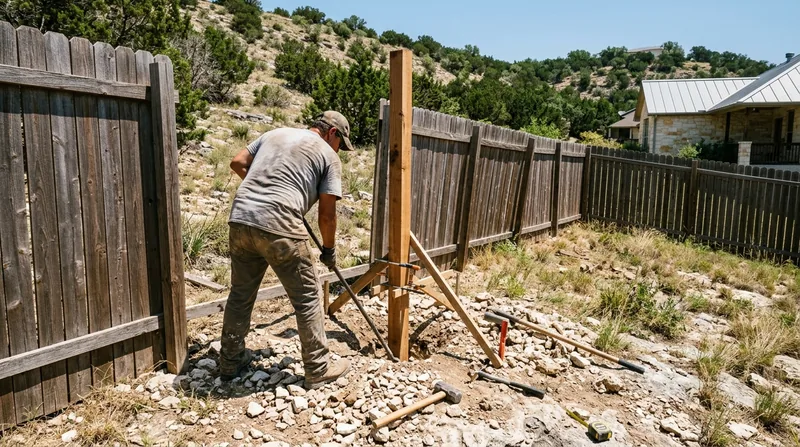




Fence posts in Austin lean for two different reasons, and the fix depends on which side of the escarpment you're on and what's happening underground. West of the Balcones Fault, we reset posts into drilled rock. East of it, the fence post repair challenge is the expansive clay: it swells when wet and shrinks when dry, heaving posts out of plumb and cracking rails. A leaning fence post that looked fine last spring may be visibly racked by late August, and by fall a single bad post can pull an entire section out of line. We remove the damaged post, dig out the swollen clay, set fresh concrete sized for that movement, and your fence line comes back straight. Most homeowners think they need a new fence when they really just need fence post replacement in a few spots. We assess each post and propose repair or replacement based on what the wood and the soil tell us, not on what sells the biggest job.
Why Fence Posts Fail in Austin: Clay, Moisture, and Time
The Gulf Coast clay that lies beneath Austin and the surrounding communities is the defining fact of every fence post problem east of the escarpment. When summer rain soaks the ground, clay swells. When fall and winter dry it out, it shrinks and pulls away from the post, leaving air pockets. This wet-then-dry cycle repeats year after year, and the post shifts with it. Water also collects at the base of any post set in tamped soil, not concrete, and untreated wood rots from the ground line up. Even pressure-treated pine has a finite life at the soil interface, especially in our humid climate. A post that starts out plumb will lean, twist, or settle unevenly, and once movement starts, the rails and pickets follow. Concrete set properly around a post resists heave much better than tamped earth, but the concrete itself must be sized and sloped to shed water, not trap it.
- Posts set in tamped soil shift with clay expansion and contraction, especially during the wet-then-dry late summer cycle.
- Water pooling at the base of a post accelerates rot at the ground line, the weakest point in any fence.
- Concrete set too shallow or without proper slope allows water to wick into the post and cause heave.
- A single bad post can pull rails out of square and create visible gaps between pickets or panels.
- Leaning posts are almost always a post problem, not a panel problem, and catching them early saves the whole fence line.
Early detection and repair of a single compromised post can prevent the expense and disruption of replacing an entire fence section.
Key info: In Cedar Park and Leander, where many lots sit on the limestone plateau, posts often hit bedrock before they reach proper depth. We drill and set anchors into rock rather than rely on concrete alone, which prevents the frost heave and clay shift that plague lower-elevation neighborhoods.
How We Repair and Replace Fence Posts in Austin: Step by Step
Our crew starts with a site inspection to identify which posts are failing and why. We probe the soil, check the concrete at the base, and assess whether the wood can be saved or needs to come out. If the post is sound 18 inches above ground but rotted below, we may be able to cut it off and bolt a pressure-treated extension onto the good wood above. If the entire post is compromised or the concrete is failing, we remove it, dig out the old concrete and any swollen clay, and set a new post in fresh concrete sized and sloped for Austin's clay conditions. We also call for a Texas 811 utility locate before we dig, because gas, electric, and water lines run under every fence line.
- We inspect the post, probe the soil and concrete, and determine whether repair or replacement is the better choice.
- We request a Texas 811 utility locate to mark any underground lines before we break ground.
- We remove the damaged post and excavate the old concrete and swollen clay down to firm soil.
- We set a new pressure-treated post in concrete mixed and sloped to resist heave and shed water away from the base.
- We reattach rails and pickets to the new post and ensure the fence line is plumb and square.
- We clean up and haul away all debris, leaving the fence line ready to serve another decade or more.
The entire process for a single post typically takes a few hours, and we can usually complete multiple posts in a day depending on access and soil conditions.
Example: A homeowner in Pflugerville noticed three posts leaning on the east side of a privacy fence after a wet spring. We dug out the old concrete, found the clay had swollen and cracked the footing, and reset all three posts in new concrete. The fence came back plumb, the rails straightened, and the pickets closed up tight again. Cost was less than half what a full fence replacement would have run.
For more information on our full range of fence repair services, including damage from storms and weather, visit our dedicated repair page.
Repair vs. Replacement: When to Fix a Post and When to Replace It
| Approach | Description | Best for |
|---|---|---|
| Post Extension | Cut the post above the rot line and bolt a pressure-treated extension onto the sound wood above ground. | Posts with rot only at the ground line and solid wood 18+ inches up. |
| Concrete Reset | Remove the post, dig out old concrete and swollen clay, set the same post in new concrete with proper slope and drainage. | Posts that are straight but heaving or settling due to clay movement and poor concrete footing. |
| Full Post Replacement | Remove the damaged post entirely and install a new pressure-treated post set in concrete. | Posts with rot throughout, severe lean, or structural damage that cannot be salvaged. |
| Bracing and Reinforcement | Add diagonal bracing or sister posts to stabilize a leaning or weak post without full replacement. | Posts with minor lean, temporary support during concrete cure, or reinforcement of corner posts. |
We choose the method that gives you the longest service life at the lowest cost, and we explain the tradeoff plainly so you can make an informed decision.
Fence Post Repair and Replacement Cost in Austin: What to Expect
A single post repair or replacement starts at around $480 and varies based on soil conditions, post height, and whether the old concrete and clay need extensive excavation. Posts in firm soil or rock are faster and less expensive than posts in deep clay or near tree roots. A post set in concrete in Austin's expansive clay may take longer to excavate and requires more concrete than a post set in stable soil elsewhere. If multiple posts are failing, we can often bundle the work and reduce the per-post cost. Storm damage that affects five or six posts in a row will cost more than isolated repairs, but the total is still far less than replacing the entire fence. We always provide a detailed estimate before we start, and we recommend getting two or three estimates so you can compare scope and price.
Factors that move the cost up include posts that are difficult to access (near a deck, pool, or landscaping), posts in very hard clay or rock that requires special drilling, and posts that are taller than standard (6 feet or more). Posts in corners or at gates may require extra bracing or reinforcement. If the fence is old or has multiple failing posts, we assess the whole line and may recommend a phased approach: repair the worst posts now, and plan for replacement of others in the next year or two as the fence ages. This spreads the cost and keeps your fence functional while you plan the larger investment.
For detailed pricing on all our services, including volume discounts for multiple posts, visit our pricing page.
Hiring a Fence Post Repair Contractor Near Me in Austin: What to Look For
When you're looking for a fence post repair contractor near you, start by checking that they carry full insurance, including general liability and workers' compensation. Ask for a certificate of insurance before they start work. In Texas, fence installation is not regulated by a state license, so licensing is set county by county and varies across the Austin area and surrounding communities. Check with your local building department or HOA to understand what permits and approvals you need for your specific job and location. If your property has a deed restriction or HOA architectural standards, verify that any repair work complies with those rules before you begin. Get at least two or three estimates so you can compare the scope of work, the method, and the price. Ask for references from recent jobs in your neighborhood, and call them to ask about the quality of the work and whether the crew cleaned up afterward.
- Verify that the contractor carries full insurance and can provide a current certificate of insurance on request.
- Check your local building department website to understand permit requirements for fence work in your jurisdiction.
- Review any HOA architectural standards or deed restrictions that may govern the repair or replacement.
- Get at least two estimates and compare the method, timeline, and warranty or guarantee offered.
- Ask for references from recent jobs in Austin or nearby communities and follow up with a phone call.
- Confirm that the contractor will call for a Texas 811 utility locate before digging any post holes.
A contractor who takes time to explain the problem, proposes repair before replacement, and answers your questions directly is worth the call.
Ready to get your fence posts assessed and repaired? Contact us for a free estimate or call (737) 237-0592 to schedule an inspection. We serve Austin, Round Rock, Cedar Park, Pflugerville, Georgetown, Leander, Kyle, Buda, and all surrounding areas.
Fence Post Repair & Replacement in Austin: Pricing Guide
| Service | Price | Details |
|---|---|---|
| Single Post Repair or Replacement | Starting at $480 | Includes excavation, concrete removal, new post installation in concrete, rail reattachment, cleanup |
| Post Extension or Reinforcement | Starting at $350 | Bolt-on extension above rot line or diagonal bracing to stabilize a leaning post without full replacement |
| Multiple Posts (3 to 6) | Starting at $1,200 | Bundled pricing for adjacent or multiple failing posts reduces per-post cost and improves efficiency |
| Complex or Storm Damage Job | On estimate | Multiple posts, difficult access, hard soil, or bracing required; site inspection determines scope and timeline |
| Travel and Utility Locate | Included | No mileage fee in Austin and surrounding service areas; Texas 811 utility locate requested at no extra charge |
| Free Estimate | No obligation | Response within 24 hours at (737) 237-0592; detailed written estimate before any work begins |
Indicative pricing, the exact cost depends on square footage, finish, and site access. Free personalized estimate within 24h at (737) 237-0592.


