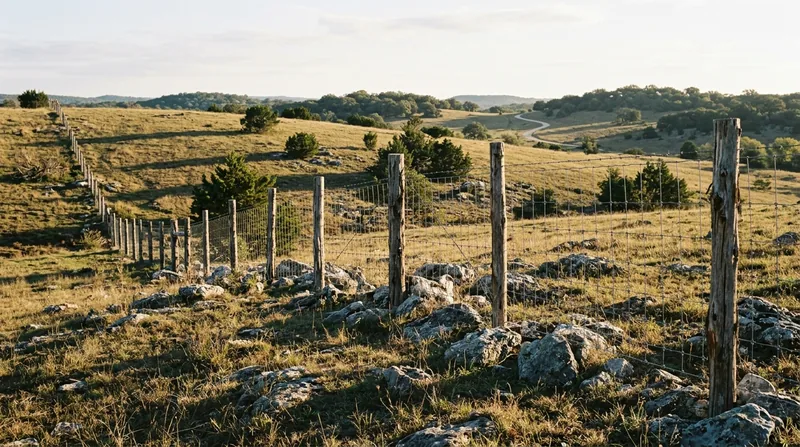




Farm fence installation in Austin crosses two distinct landscapes: the rocky limestone hills of the Hill Country and the flat, clay-heavy prairie of the prairie counties. Whether you're fencing acreage in Travis, Williamson, or Hays County, the ground itself dictates the method. Austin's expansive clay soil swells and shrinks with wet and dry cycles, which heaves fence posts and racks panels over time. Rock outcrops in the Hill Country demand drilled post holes and different anchoring strategies. Spring storms, summer heat, and the occasional hurricane-season wind all test a fence's integrity on acreage. We set wood posts and wire runs to hold livestock across this varied terrain, adapting our technique to soil type, rock depth, and the specific demands of your property.
Why Farm and Ranch Fencing Matters in Austin Hill Country and Prairie
Livestock fencing on acreage is not the same as a residential privacy fence. A horse, cattle, or goat fence must hold pressure from animals moving against it day after day, season after season. The posts must be set deep enough to resist the frost heave that occurs in our clay soil, and the wire or board runs must be tight and secure. Austin's weather cycles, from the wet springs that soften clay to the dry summers that crack it, create constant stress on fence posts. A leaning or failing fence on a ranch doesn't just look bad; it fails to contain livestock and creates liability for you and risk for your animals.
- Posts must be set below the frost line and in concrete to resist heave in clay soil and hold against animal pressure.
- Wire runs, boards, and rails need to be tensioned correctly so they remain taut as the ground shifts and weather changes.
- Split rail, pipe, and no-climb horse fence each require different post spacing and anchoring to work safely and last.
- Barbed wire and hot wire installations demand proper grounding and tensioning to contain livestock reliably across seasons.
A well-built farm fence on Austin acreage is an investment that pays for itself in contained animals and reduced liability over years.
Key info: Austin and Hill Country ranchers often face rocky ground that requires drilling or blasting to set posts deep enough. The flat prairie counties around Pflugerville and Hutto have clay so dense that posts must be set in concrete to resist heave. Knowing your soil type before you start saves time and money.
For more on how we approach fencing challenges, see our guide to fence post repair and replacement, which covers the most common failure points on acreage fencing.
How We Install Farm and Ranch Fencing Across Austin Terrain
Every acreage fencing job starts with a site walk to assess soil type, rock depth, and the specific demands of your livestock and property layout. We call 811 before digging to locate utilities. From there, we determine post spacing based on the fence type and animal pressure it will face. Split rail and ornamental ranch fencing typically use wider spacing; no-climb horse fence and pipe fence require closer post spacing and deeper anchoring. We set posts in concrete for lasting stability, especially in clay soil where frost heave is the rule, not the exception.
- Walk the property line with you to confirm the fence run, identify obstacles, and assess soil and rock conditions.
- Call 811 to locate underground utilities before any post holes are dug.
- Drill or auger post holes to the required depth based on soil type and frost line depth for your county.
- Set posts in concrete and allow proper cure time before hanging rails, boards, or wire.
- String and tension wire runs or install boards and rails level and square.
- Add gates, hinges, and latches, and test the entire fence for tautness and animal-proof security.
The result is a fence that holds livestock reliably and resists the seasonal heave and weather stress that is typical of Austin acreage.
Example: A 10-acre property in Kyle with clay soil and horse pastures needed no-climb fence. We spaced posts 8 feet apart, set them 3 feet deep in concrete, and installed 4-inch mesh with tension bands. The fence has held for over five years without visible sag or post movement.
Learn more about our approach to gate installation and repair, which includes the heavy-duty hinges and latches that ranch gates demand.
Farm and Ranch Fencing Methods and Materials
| Fence Type | Material and Construction | Best for |
|---|---|---|
| Split Rail | Wood rails mortised into posts, typically 2 or 3 rails high, pressure-treated or cedar. | Decorative ranch appearance, horses, and goats on smaller acreage where visibility is desired. |
| No-Climb Horse Fence | Vinyl or wire mesh with 4-inch spacing, galvanized or powder-coated steel, high tensioning required. | Horses, preventing hooves from catching, and areas where traditional rail is not practical or affordable. |
| Pipe Fence | Galvanized or powder-coated steel pipe welded or bolted to posts, typically 2 or 3 rails high. | Cattle, horses, and high-pressure applications where durability and low maintenance are priorities. |
| Barbed Wire | Galvanized steel wire stretched between posts with tension bands and corner bracing, typically 4 to 5 strands. | Cattle containment on large acreage where cost is a factor and visibility is not a concern. |
| Hot Wire Electric | High-tensile wire or poly tape energized by a charger, installed with insulators on wood or fiberglass posts. | Rotational grazing, temporary pasture division, and low-cost boundary definition for livestock. |
Each method has a different cost, lifespan, and maintenance profile. The right choice depends on your livestock type, acreage size, terrain, and long-term budget. We help you weigh the trade-offs so you get a fence that works for your operation.
Farm and Ranch Fencing Cost in Austin: What to Expect
Farm fence pricing depends on several concrete factors. Split rail fence typically costs more per linear foot than barbed wire, but it lasts longer and requires less maintenance. Pipe fence and no-climb horse fence fall in the middle, with pricing driven by material cost and the depth of post setting required in your soil. Posts set in clay soil cost more than posts in rock because clay requires deeper holes and concrete backing. Wire runs and tensioning add labor but are essential for lasting containment on acreage.
A typical ranch fencing project in the Austin area starts at around $14 per linear foot for basic barbed wire or hot wire on post-only construction. Split rail and pipe fence typically run $18 to $35 per linear foot depending on rail height and material grade. No-climb horse fence with vinyl mesh or high-tensile wire runs $22 to $40 per linear foot. Posts set in rocky Hill Country terrain may cost more due to drilling, while clay prairie posts set in concrete add labor but ensure lasting stability.
Factors that move the cost up include rock drilling, deeper frost line depth, difficult access for equipment, corner bracing and anti-sag hardware, and gate installation. A free estimate from us includes a site walk, soil assessment, and a detailed breakdown of materials and labor. We typically respond within 24 hours at (737) 237-0592. Most Austin acreage fencing jobs fall between $2,000 and $8,000 depending on acreage size and fence type chosen.
For a full pricing overview and to see how we structure estimates, visit our pricing page.
Farm and Ranch Fencing Near Me: What Austin Homeowners and Ranchers Should Know Before Hiring
Hiring a contractor for acreage fencing is a bigger decision than residential fence work because the stakes are higher and the job is often more complex. You need someone who understands soil type, can read terrain, knows how to call 811 correctly, and has experience with livestock containment. Before you sign a contract, confirm that the contractor carries full general liability and workers' compensation insurance and can provide a certificate of insurance on request. We are fully insured and can document coverage for your records.
Fence installation in Texas is not regulated by a state license. Fence licensing here is set county by county, and many counties including Travis and Williamson do not require a fence contractor license for work under certain thresholds. Projects at or above $40,000 may require a licensed general contractor; confirm the threshold with your county building department. We are members of the American Fence Association and have been in business since 2015. Get multiple estimates so you can compare method, material, and price. Ask each contractor how they handle frost heave, rock drilling, and post tensioning in your specific soil type. Check references from recent acreage jobs, not just residential fence work. Confirm that the contractor will call 811 before digging and that they understand your county's setback rules and any HOA restrictions that may apply to your property.
Ready to move forward? Contact us for a free estimate and let us walk your acreage with you.
Farm & Ranch Fencing in Austin: Pricing Guide
| Service | Price | Details |
|---|---|---|
| Barbed wire or hot wire fence | Starting at $14/ft | Basic post and wire containment, cost varies by post depth required in clay or rocky soil |
| Split rail or ornamental ranch fence | Starting at $18/ft | Wood rails mortised to posts, pressure-treated or cedar, spaced for horses or decorative appearance |
| Pipe fence or no-climb horse fence | Starting at $22/ft | Steel pipe or high-tensile mesh, tension bands and corner bracing, best for high-pressure livestock |
| Rock drilling or difficult terrain | On estimate | Hill Country limestone and rocky acreage require drilling or blasting, labor and equipment added to base rate |
| Gates and corner bracing | On estimate | Heavy-duty ranch gates, anti-sag hardware, and corner posts with bracing add cost based on gate size and type |
| Free estimate | No obligation | Site walk, soil assessment, and detailed quote within 24 hours at (737) 237-0592 |
Indicative pricing, the exact cost depends on square footage, finish, and site access. Free personalized estimate within 24h at (737) 237-0592.


